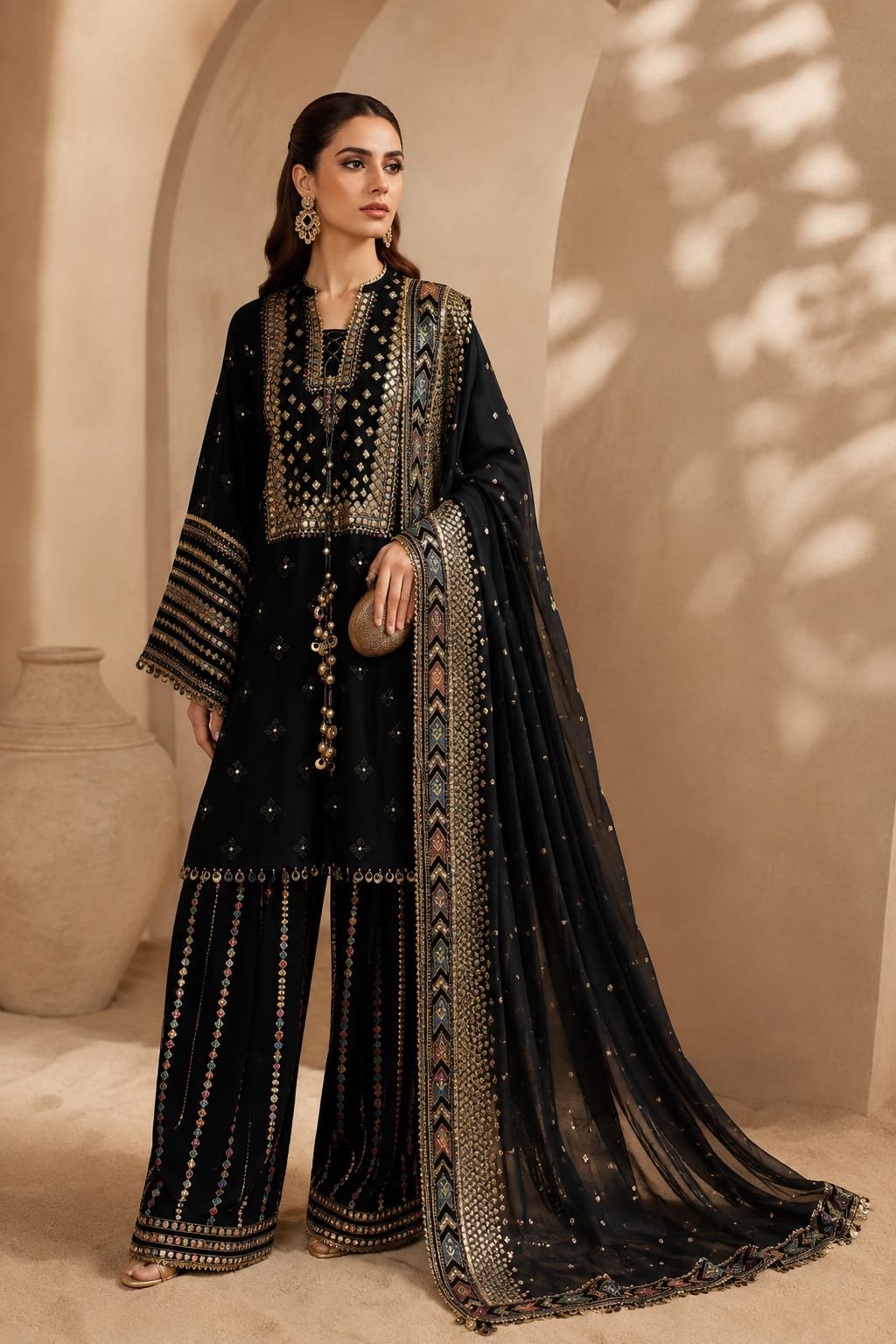
Key Takeaway & Textile Science
Pure Micro Velvet (Micro 9000) is an ultra-dense, micro-denier woven textile characterized by short, directional warp pile that resists crushing while delivering a fluid, liquid drape. When paired with antique matte metallic needlework (Tilla & Marori) across both the shirt and coordinating trouser, it reinterprets 17th-century Mughal imperial winter robes for modern formalwear, balancing structural warmth with non-reflective antique opulence.
When winter arrives across South Asia, couture shifts from the breezy lightness of lawn and organza to the tactile majesty of heavyweight textiles. At the summit of this seasonal transformation stands pure micro velvet—a fabric historically associated with sovereign courts, now elevated through antique hand-embellished craftsmanship on matching shirts and trousers.
Yet not all velvet is created equal. The difference between a stiff, heat-trapping synthetic garment and an heirloom-grade velvet ensemble lies in the precise physics of micro-pile weaving, frame-stabilized needlework, and the restraint of antique metallic threadwork.
1. The Imperial Lineage: Royal Winter Robes of the Mughal Courts
The marriage of plush pile fabrics and metallic thread embroidery has deep roots in imperial court culture. During the 16th and 17th centuries, Mughal emperors and Kashmiri nobles commissioned heavy velvet robes (such as the ceremonial Chogha, Farji, and royal Pheran) embellished with genuine silver and gold Kalabattu wires.
Extensive archival collections at The Metropolitan Museum of Art (The Met) Islamic Textile Archives and the Victoria and Albert Museum (V&A) Court Costume Collection document how velvet was prized not merely for its thermal insulation, but for its unique light absorption. Unlike glossy satins that reflect harsh light, the vertical cut pile of velvet absorbs ambient lighting, creating a deep, velvety backdrop against which antique metallic embroidery appears to hover with dimensional clarity.
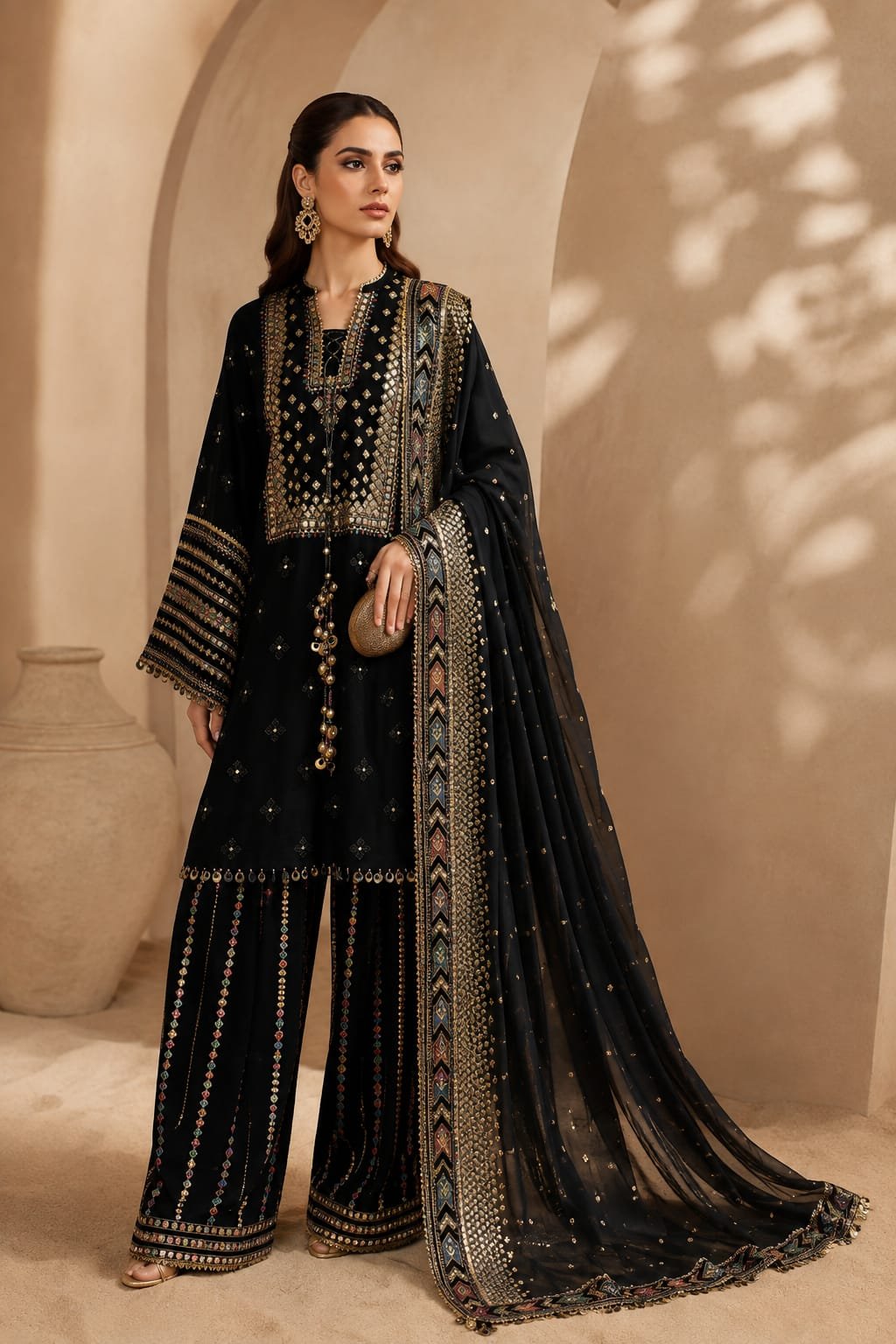
2. Textile Physics: Why Pure Micro Velvet (Micro 9000) Outperforms Velveteen
The commercial market frequently mislabels cheap cotton velveteen or low-grade polyester plush as luxury velvet. Understanding the textile metrics is crucial:
Anti-Crush Fiber Count
Micro velvet utilizes micro-denier yarns packed at over 9,000 filaments per square inch. This tight vertical orientation prevents the pile from flattening or developing "shine patches" when seated.
340–380 GSM Balance
Traditional velvets are stiff and boxy. Micro 9000 velvet delivers a heavy, supple fluid drape that cascades along body contours without stiff flare.
Thermal Equilibrium
High-grade micro velvet allows body heat dissipation through its porous woven backing, preventing the clammy overheating common in cheap synthetic poly-velvets.
3. The Engineering of Antique Needlework on Pile Fabrics
Embroidering directly onto velvet is one of the most technically difficult feats in haute couture. Because velvet possesses a raised 3D pile, standard needles can crush the fibers or cause uneven fabric puckering.
The Adda Frame & Stabilizing Substrates
Master artisans stretch the velvet fabric on an Adda (heavy slate wooden embroidery frame) under calculated tension. A specialized water-soluble or fine cotton organza underlay is tacked beneath the velvet to distribute needle pressure.
Antique Tilla vs. Brassy Synthetic Zari
Modern commercial garments often use bright, high-shine yellow metallic threads that clash with the rich depth of velvet. High couture relies exclusively on antique matte Tilla (dull gold, oxidised silver, and tarnished copper tones). This antique patina complements the velvet's light absorption, delivering an aristocratic, understated elegance.
4. Trouser Embroidery: Rebalancing the Formal Silhouette
Historically, velvet suits featured heavily embroidered kurtas paired with plain silk trousers. In contemporary bespoke tailoring, extending matching antique work to the trouser hemline (Paiyche) serves both aesthetic and structural purposes:
- Visual Symmetry: Anchors the lower hemline, creating an uninterrupted vertical visual line that elongates the silhouette.
- Structural Weighting: The dense antique tilla embroidery along the trouser cuffs adds micro-weight to the hem, ensuring the velvet trousers maintain a crisp, straight fall while walking.
- Styling Versatility: A coordinating embroidered velvet trouser allows the wearer to repurpose the piece effortlessly with silk tunics, organza wraps, or structured jackets.
5. Technical Comparison: Oxybliss Pure Micro Velvet vs. Commercial Velvet
| Quality Dimension | Oxybliss Pure Micro Velvet (9000) | Commercial Fast-Fashion Velvet |
|---|---|---|
| Yarn Denier & Density | Micro-filament 9000 high-density pile | Coarse polyester yarn, low density |
| Embroidery Execution | Frame-mounted antique Tilla on shirt & trouser | Machine stamped or puckered computer stitch |
| Pile Crush Resistance | High resilience; self-recovering directional pile | Permanent creases and shiny pressure marks |
| Drape & Silhouette | Fluid, liquid cascading fall with structural weight | Stiff, rigid, tent-like silhouette |
| Color Saturation | Deep, light-absorbing jewel tones (Wine, Teal, Midnight) | Flat surface shine with uneven dye penetration |
6. Garment Care: Caring for Pure Velvet Heirlooms
Velvet requires specialized curatorial maintenance to preserve the directionality of its pile:
1. Never Apply a Direct Flatiron: A conventional hot iron will crush the vertical pile fibers permanently. Always use vertical steam or iron the garment inside-out on a velvet board or soft towel.
2. Padded Hangers: Always hang velvet ensembles on wide, padded wooden hangers to avoid shoulder dimples.
3. Professional Dry Cleaning Only: Water immersion will dissolve sizing resins and distort the pile alignment.
"Velvet does not shout; it commands the room through the quiet dignity of its depth."
Oxybliss Winter Atelier • Bespoke Velvet Formals