Key Takeaways & Craft Definition
Mukesh (also Mukaish, Muqaish, or Badla) is a 300-year-old metallic needlecraft originating in the royal courts of Awadh (Lucknow). Artisans weave flattened metallic ribbons (Badla) into delicate fabrics like antique net, organza, and fine lawn, twisting and burnishing each dot by hand. Unlike modern machine-pressed plastic foil stamping, authentic hand-crafted Mukesh delivers an organic light reflection, non-abrasive finish, and multi-generational heirloom durability.
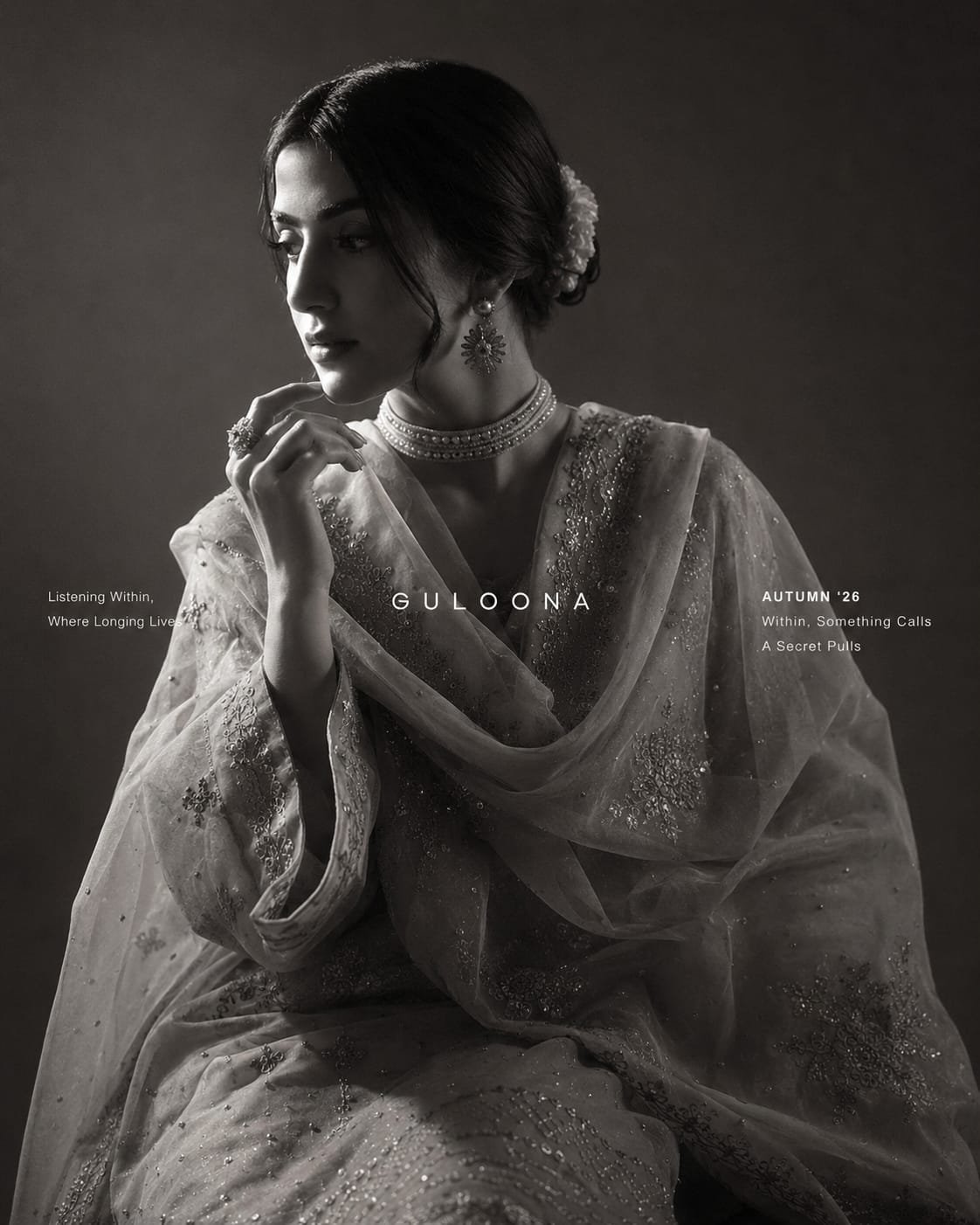
In an era dominated by high-speed computerized embroidery and disposable fast fashion, true luxury lives in the deliberate, quiet rhythm of human hands. Few textile crafts embody this truth as profoundly as Mukesh work (historically termed Muqaish or Badla)—an exquisite, centuries-old art of metallic adornment that once illuminated the royal durbars of the Nawabs of Awadh.
When paired with ethereal antique net and anchored by a breathable foundation of pure inner lawn, Mukesh transcends mere embellishment; it becomes a masterclass in structural harmony, tactile balance, and poetic light play.
1. The Awadhi Genesis: A 300-Year Heritage of Woven Light
To understand Mukesh is to step into the cultural milieu of 18th-century Lucknow and the broader Ganga-Jamuni tehzeeb—a composite aesthetic where poets, calligraphers, and textile artisans collaborated to create garments of unmatched subtlety. While early mentions of metal thread embroidery date back to the Mughal chronicles of the Ain-i-Akbari, it was under the patron Nawabs of Awadh that Mukesh evolved into an independent decorative discipline.
Historically preserved in institutions such as the Victoria and Albert Museum (V&A) South Asian Textile Collection and thoroughly chronicled by heritage bodies like Sahapedia, Badla work was originally conceived to capture the radiance of candlelight and moonlit courts (chandani). Noble patrons draped themselves in sheer muslins dotted with genuine gold and silver ribbons, giving the illusion of starlight caught in fabric.
2. The Anatomy of a Dying Craft: From Metal Ingot to Gossamer Net
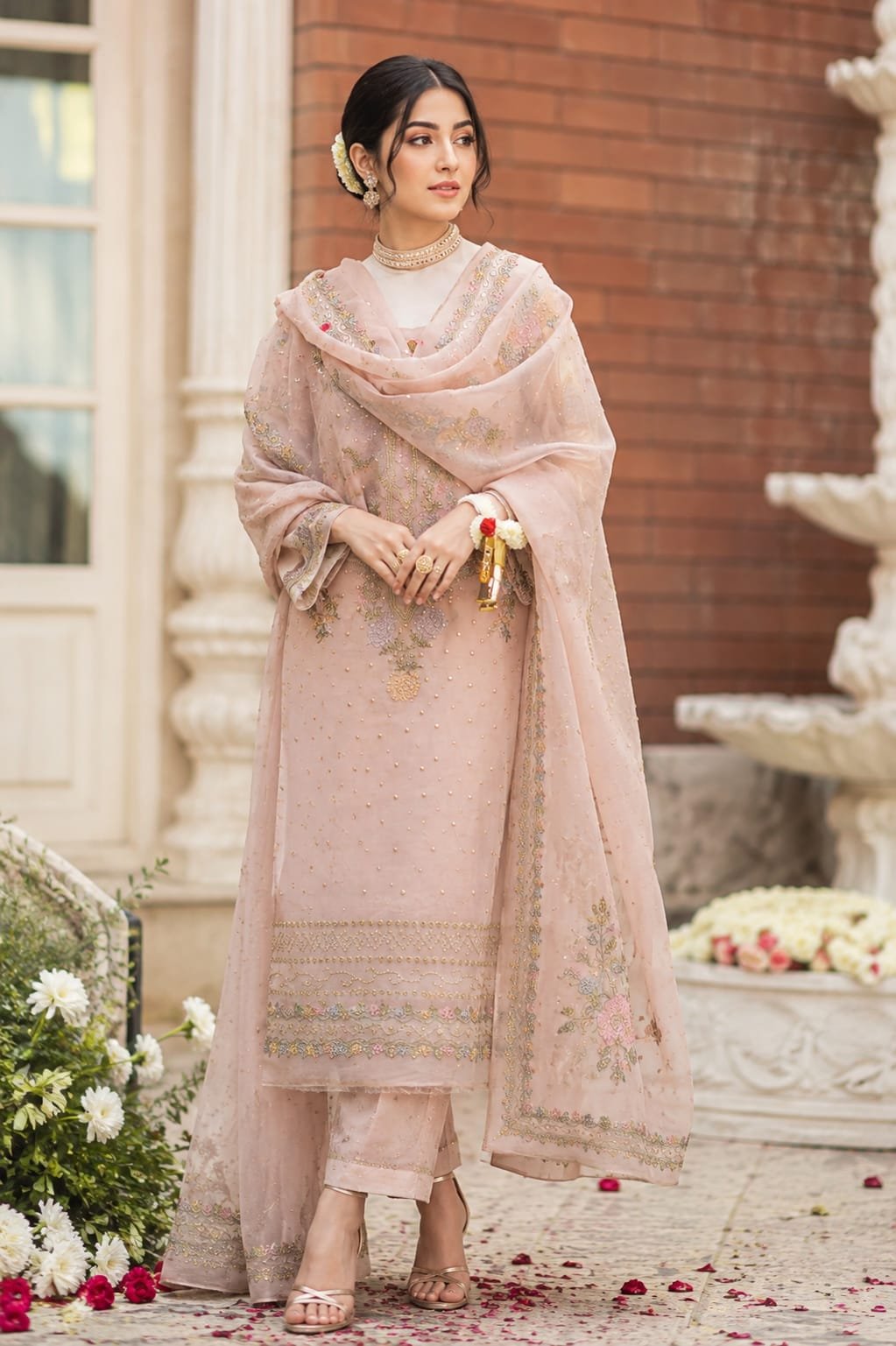
Unlike standard needlepoint embroidery that relies on threaded eyes, Mukesh is a sculptural manipulation of flattened wire known as Badla. The master craftsmen—traditionally called Badlas or Mukesh Karigars—execute the craft in three rigorous stages:
Pattern Printing
The garment is marked with intricate traditional motifs using wooden blocks dipped in temporary fugitive dyes (zinc paste or natural indigo) that vanish upon washing.
Wire Weaving
Artisans pierce the flattened metallic wire directly through the fabric's warp and weft, twisting and flattening the ribbon with fingernails to create seamless geometric nodes.
The Burnishing Rite
The embroidered textile is stretched over a wooden board and rigorously polished with a smooth glass bottle or cowrie shell to flatten all wire edges and unleash metallic luster.
The Dual Stylistic Typologies: Fardi vs. Kamdani
- Fardi ka Kaam (The Celestial Dot): The most recognizable form of Mukesh, consisting of thousands of tiny, individually knotted metallic dots. Variations include Dhanak (rainbow-like arced gradients), Tikli (larger flattened sequin discs), and Hazaar Buti (thousand-star fields).
- Kamdani (Relief Embroidery): The wire is threaded through the textile to fill in complete floral motifs, paisleys (kalka), and vines, yielding a raised, luminous tapestry effect.
3. The Structural Genius: Why Antique Net Requires Pure Inner Lawn
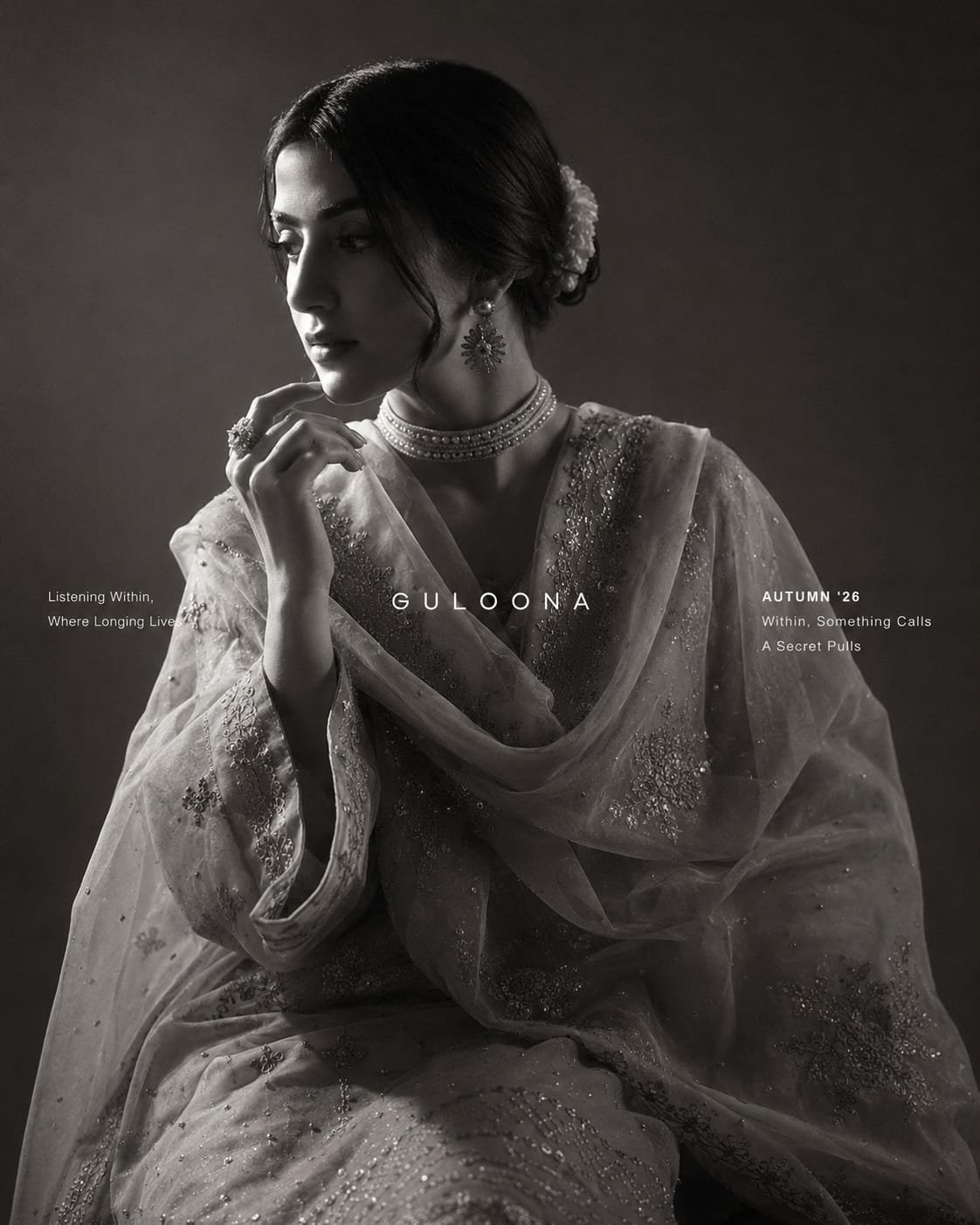
A common pitfall in modern ethnic wear is the pairing of sheer outer fabrics with synthetic polyester linings. In high-end artisanal tailoring, the pairing of Antique Net and Inner Lawn represents deliberate textile engineering:
The open hex-mesh of antique net creates translucent negative space. The dense, matte weave of pure combed lawn underneath serves as a canvas, accentuating the metallic reflection of each individual Mukesh point.
Even after thorough Ghutaayi burnishing, metallic wire knots on the reverse side of sheer net can cause micro-friction against sensitive skin. Pure 100% lawn provides an ultra-soft, hypoallergenic shield.
Formal South Asian events demand hours of wear. While net offers ventilation, lawn delivers rapid moisture absorption and thermal regulation, ensuring the wearer remains cool under intense lighting.
4. Quality Benchmark: Hand-Crafted Mukesh vs. Machine Foil Printing
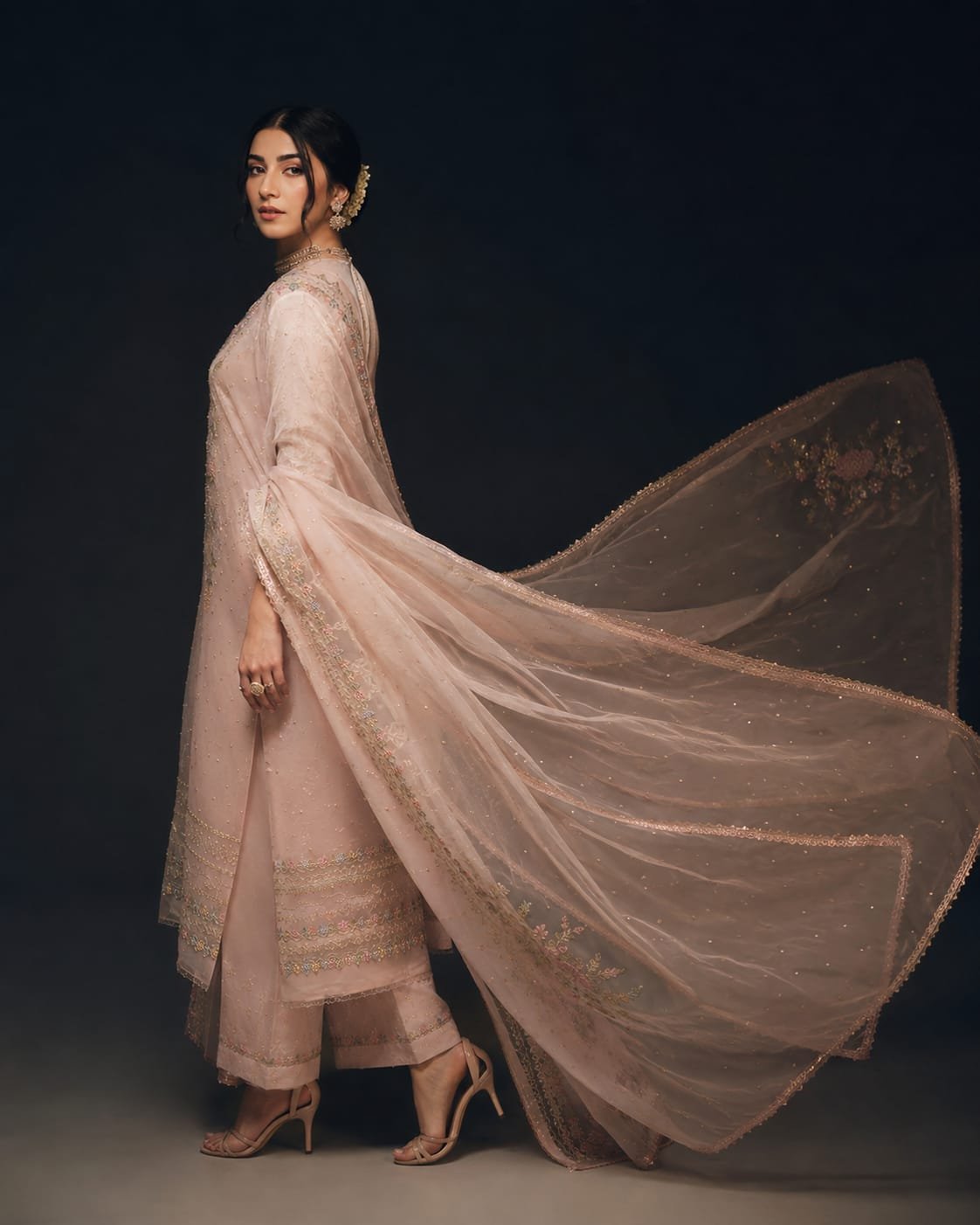
The commercial fashion market is inundated with counterfeit "Mukesh lookalike" garments created through chemical heat-transfer foil stamping. The table below outlines how discerning connoisseurs can differentiate authentic hand-twisted Mukesh from commercial imitations:
| Evaluation Metric | Authentic Hand Mukesh (Oxybliss Standard) | Commercial Foil / Sequin Stamping |
|---|---|---|
| Raw Material | High-grade flattened metallic wire (Badla ribbon) | PVC plastic dots glued with acrylic polymer |
| Reverse Side Inspection | Visible micro-crimp fold pierced through mesh fibers | Completely flat or sticky glue residue |
| Luminosity & Patina | Reflects 360-degree organic light; acquires antique vintage patina | Uniform, harsh artificial glare that fades quickly |
| Heirloom Durability | Lifespan measured in decades; passes down through generations | Cracks, peels, and washes off within 2–4 wash cycles |
| Tactile Feel | Smooth, cool metallic touch burnished via Ghutaayi | Plastic, stiff, and abrasive against adjacent textiles |
5. Curatorial Care: How to Preserve Mukesh Heirlooms
Because genuine Mukesh involves authentic metallic wires, improper storage can lead to tarnishing or snagging. Follow these museum-grade preservation tips:
- Muslin Wrapping: Always store Mukesh garments wrapped in unbleached, breathable cotton muslin. Never store in airtight plastic bags, which trap humidity and accelerate wire oxidation.
- Folding Protocol: Fold the garment with the embroidered side turned inward, placing butter paper or acid-free tissue between layers to prevent wire friction.
- Cleaning: Strictly dry-clean through specialized couture cleaners. Never spray perfume directly onto Mukesh embellishments, as alcohol accelerates metal discoloration.
6. Frequently Asked Questions (FAQ)
Q: What is the main difference between Mukesh and Zardozi?
While both are royal metallic crafts, Zardozi utilizes heavy 3D metallic coiled springs (Dabka, Kora) sewn onto fabric with a needle, creating heavy sculptural relief. Mukesh utilizes thin, flat metallic ribbons (Badla) that are woven directly through the fabric's yarns without thread, creating a flush, starlight-like surface.
Q: Why is genuine handmade Mukesh becoming increasingly rare?
Mukesh is exceptionally labor-intensive. Embellishing a single bridal dupatta can take up to 25 to 40 days of continuous manual work by skilled artisans. As fewer youth enter the generational craft, authentic hand-twisted Mukesh has become an elite collector's rarity.
Q: How can I verify that my Mukesh outfit is handmade?
Examine the reverse side of the textile. Authentic hand Mukesh will show tiny hand-folded metal wire crimps where the ribbon was passed through and flattened by hand. In addition, hand Mukesh feels cool to the touch and has microscopic organic irregularities in spacing, unlike uniform machine stamping.
"Preserving craftsmanship is not about looking backward—it is about honoring the human patience required to create something eternal."
Oxybliss Atelier • Sustainable Luxury & Heritage Couture