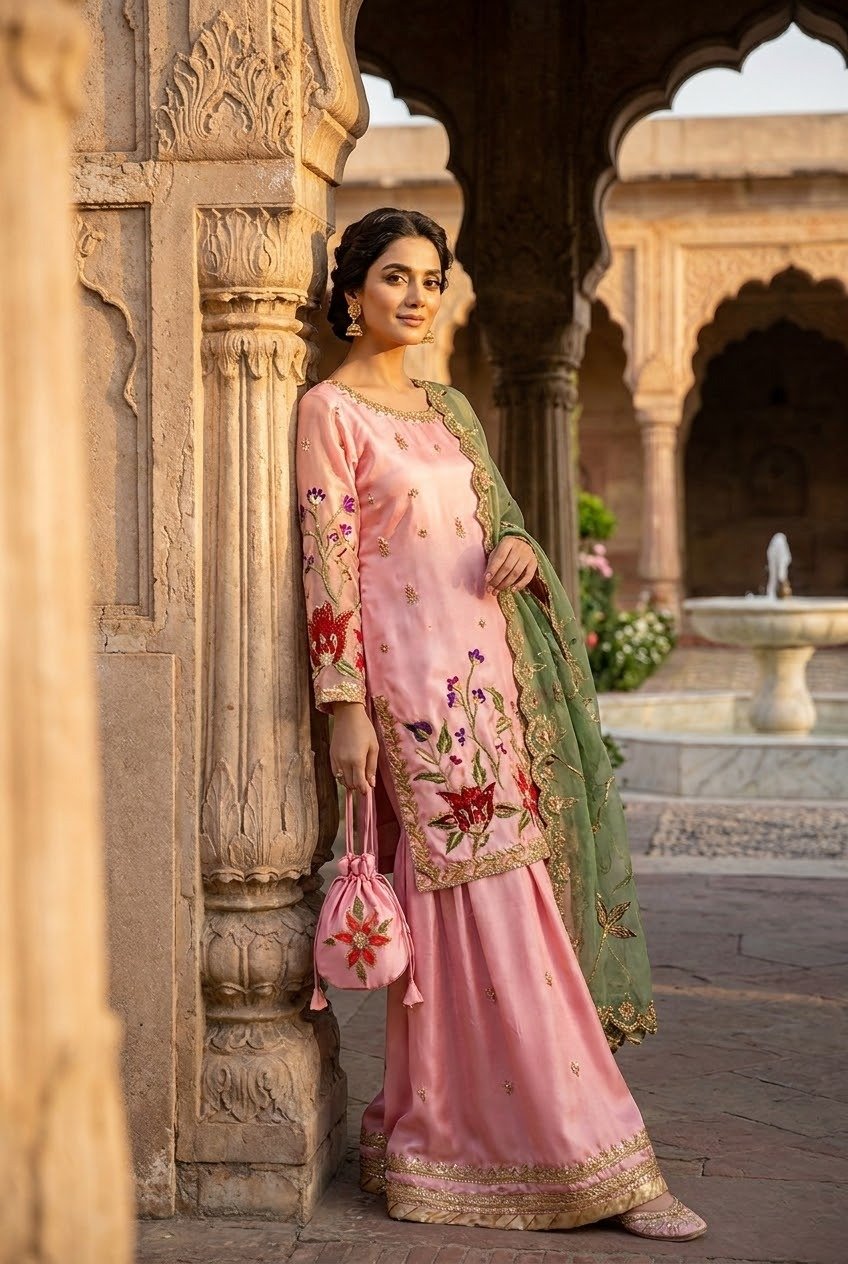
Key Takeaways & Aesthetic Synergy
The Fusion of Hand-Painted Art, Sculptural Dabka, and Sheer Organza bridges classical botanical miniature painting with 3D French-wire needlecraft. Fine pigments are hand-brushed onto translucent organza to create soft floral gradients, which are then sculpturally outlined with millimetric coiled spring wires (Dabka) and pure hand embroidery. This creates a multi-dimensional relief where tactile metallic weight floats upon a diaphanous, light-refracting canvas.
In high couture, the most captivating garments are born not from a single technique, but from the deliberate collision of two opposing artistic languages: the fluid, painterly freedom of freehand brushwork and the architectural precision of sculptural metallic wirework.
When this artistic dialogue unfolds on a canvas of translucent silk-sheen organza, the result is nothing short of wearable poetry. The organza acts as a luminous window—allowing hand-painted botanical watercolors to blend with the light, while hand-stitched Dabka creates a three-dimensional metallic silhouette that catches every ray of ambient illumination.
1. The Mughal Botanical Renaissance: From Imperial Manuscript to Fabric
The tradition of marrying naturalistic floral painting with precious metallic embellishment traces directly back to the 17th-century imperial ateliers (Karkhanas) of Emperor Jahangir and Shah Jahan. Renowned master miniaturists—such as Ustad Mansur—documented the lush flora of Kashmir, establishing a distinct South Asian botanical visual language.
As chronicled in the archives of the Smithsonian National Museum of Asian Art and the Victoria and Albert Museum (V&A) South Asian Collection, courtly sashes (patkas) and regal dupattas combined delicate mineral-paint strokes with raised gold bullion work. Today, contemporary artisanal houses like the Oxybliss Formals Atelier revive this royal fusion for modern festive occasions.
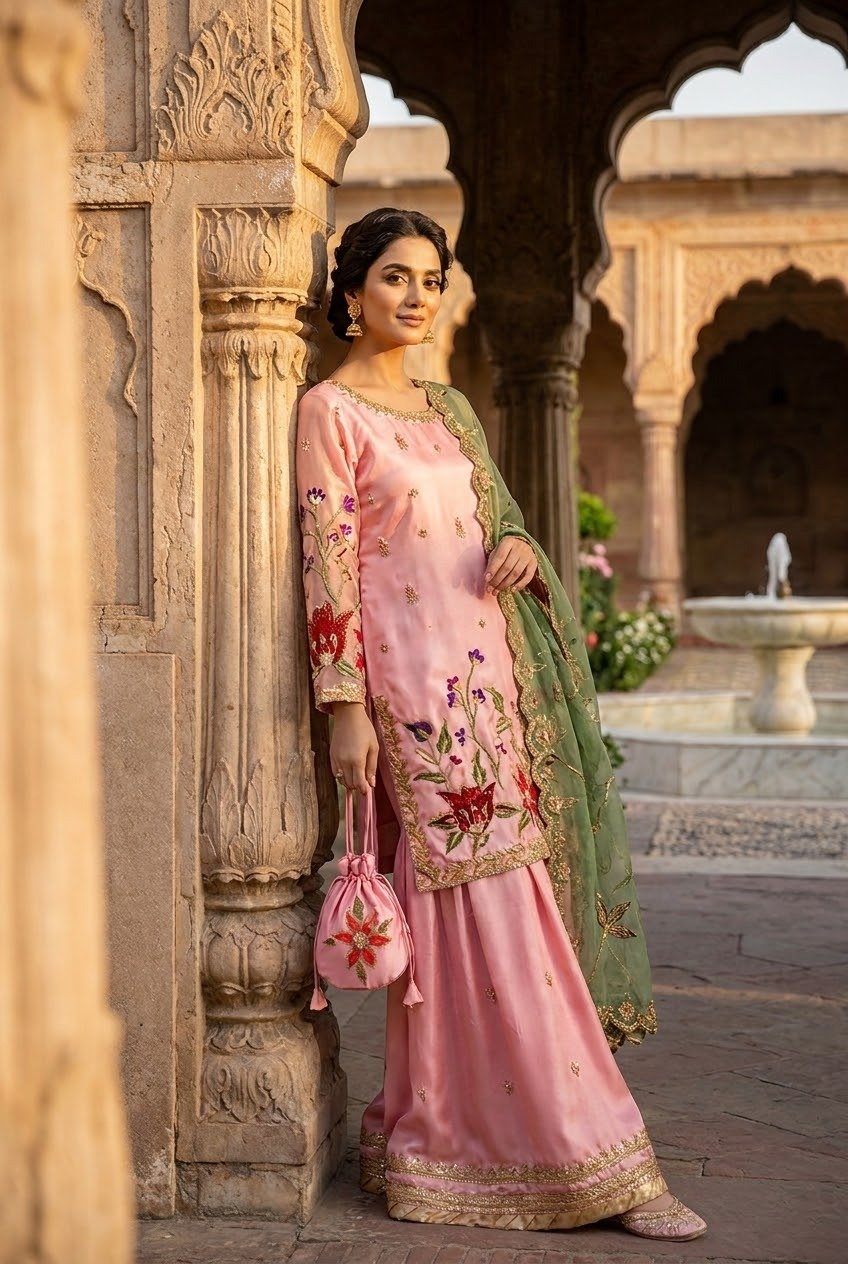
2. Deconstructing Dabka: The Science of Coiled Wire Sculpture
Unlike standard flat metallic threads (such as the Badla ribbons used in Mukesh work), Dabka is an engineering marvel. It is a continuous, spring-like hollow tube made by tightly winding electroplated metallic wire around a microscopic needle mandrel.
Millimetric Beads
Artisans carefully cut the spring-like coil with surgical shears into tiny pieces ranging from 1mm to 5mm, ensuring no hollow coil is deformed or crushed.
Invisible Anchoring
A needle threaded with waxed silk is passed directly through the hollow center of the coil bead, stitching it securely to the fabric in micro-curves.
Embossed Topography
By curving and layering coils over raised padding threads, artisans create tactile, 3D petals, leaf veins, and scrolling tendrils that physically project from the cloth.
Dabka vs. Kora vs. Nakshi: The Coiled Wire Taxonomy
- Dabka: Ultra-fine, smooth, high-flexibility spring wire that yields soft, plush metallic curves.
- Kora: A slightly stiffer, dull-finish coiled spring used primarily for crisp structural outlines and geometric borders.
- Nakshi: A crimped, multi-faceted zig-zag coiled spring that refracts light with sparkling diamond-like facets.
3. The Chemistry of Hand-Painted Organza: Breathable Pigments vs. Stiff Acrylics
One of the greatest technical hurdles in creating hand-painted luxury wear is maintaining the supple hand-feel of the fabric. Cheap commercial garments use heavy industrial acrylics that coat the fibers, turning delicate organza into brittle plastic that cracks upon folding.
Master artisans formulate water-suspended organic pigments that penetrate the inner core of the silk filaments rather than forming a crust on top. This preserves 100% of organza's natural breezy drape and soft tactile glide.
Once the botanical watercolors are hand-brushed, the textile undergoes precise heat setting. This locks the color into the molecular weave, rendering the painting waterfast without sacrificing gossamer transparency.
4. The Organza Dupatta: The Ultimate Focal Point in Festive Dressing
Why has the hand-painted organza dupatta become the centerpiece of high-end South Asian wardrobes? It solves a fundamental design challenge: how to wear opulent, heavy metallic embroidery without feeling weighed down.
- Weightless Grandeur: The organza base weighs a fraction of traditional heavy velvets or brocades, allowing for dramatic, floor-sweeping dupattas that drape effortlessly over the shoulder.
- Day-to-Evening Transition: Under natural daylight, the hand-painted pastel botanicals take center stage. Under evening chandeliers, the 3D Dabka border catches the light, instantly transitioning the look into evening formalwear.
- Styling Flexibility: Pairs effortlessly with Oxybliss Ready-to-Wear Raw Silk Suits, unstitched lawn, or contrasting bespoke trousers.
5. Quality Checklist: Authentic Hand-Painted Dabka vs. Screen-Printed Mass Production
| Craft Feature | Authentic Hand-Painted Dabka (Oxybliss) | Commercial Screen Print / Plastic Zari |
|---|---|---|
| Brushwork Artistry | Freehand watercolor gradients; no two petals identical | Repetitive mechanical screen print with hard edges |
| Dabka Metal Quality | Gilded copper/silver micro-coils threaded with silk | Glued metallic plastic piping or machine chainstitch |
| Fabric Suppleness | Organza remains soft, sheer, and fluidly draped | Stiff, crunchy, plasticized hand-feel prone to cracking |
| Dimensionality | True 3D sculptural relief that lifts off the cloth | Flat 2D printed imitation |
| Artisan Production Time | 18–28 hours of dedicated master handcraft per dupatta | Under 90 seconds on automated conveyor print lines |
6. How to Care for Hand-Painted & Dabka Embroidered Garments
• Specialized Dry Cleaning: Always entrust hand-painted organza to dry cleaners who specialize in couture and bridal wear. Request chemical-free hydrocarbon cleaning.
• Steam From Reverse: Never place an iron directly on Dabka wire, as heat will flatten the 3D hollow coils. Steam gently from the reverse side using low temperature.
• Breathable Storage: Store in acid-free cloth garment bags. Avoid cedar chests or damp storage that can cause metallic oxidation over decades.
"Art on fabric is the ultimate celebration of patience—where every brushstroke and wire coil preserves human imagination."
Oxybliss Atelier • Bespoke Hand-Painted Festive Couture