Key Takeaways & Design Architecture
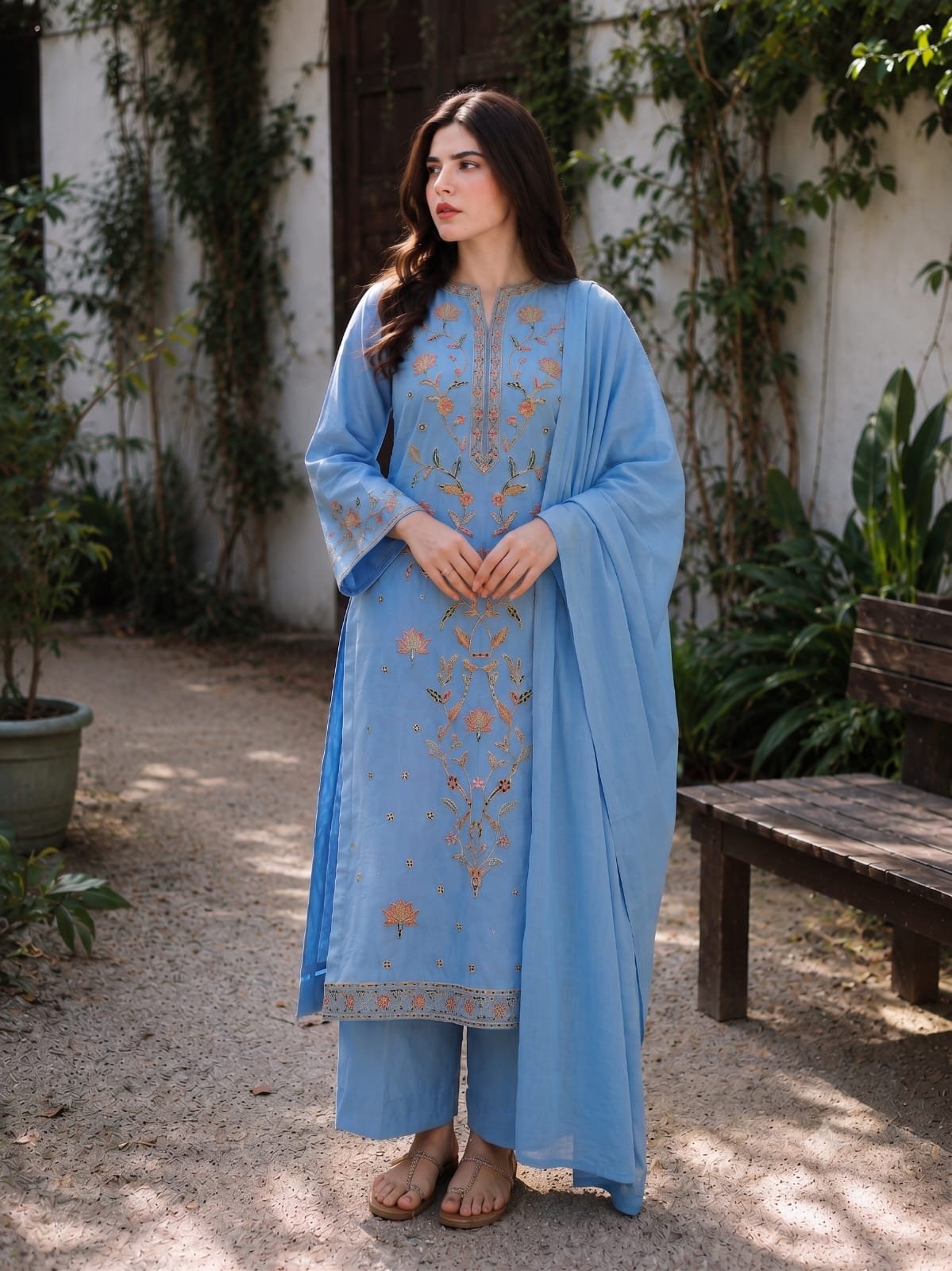
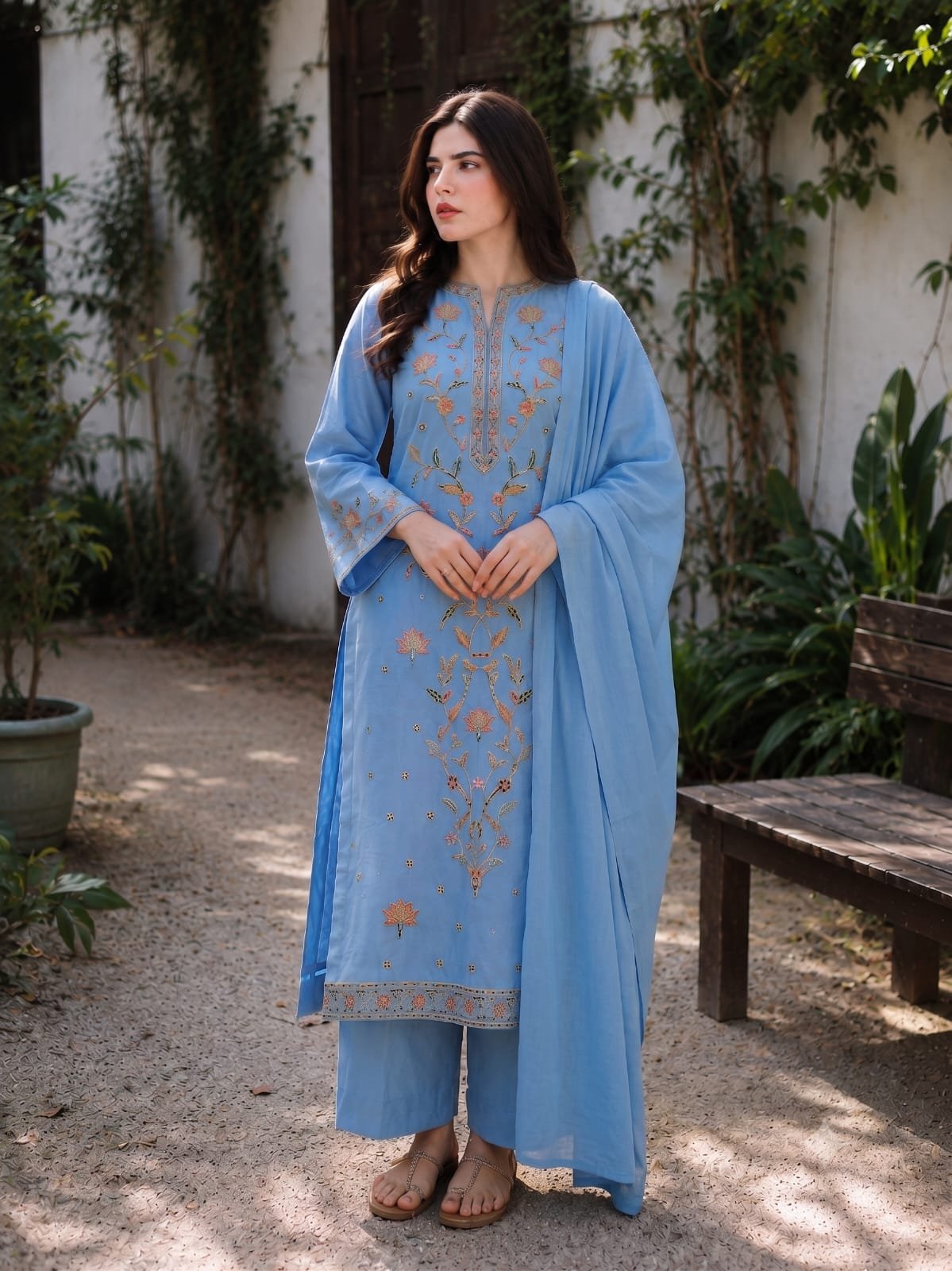
5-Color Traditional Sequence Embroidery on Premium Grip Fabric combines high-twist crepe textile physics with multi-chromatic thread layering and an architecturally weighted Daman Patch. High-density Premium Grip (190–220 GSM) provides an anti-crease, pebble-weave foundation that supports complex 5-shade resham needlework and embedded micro-sequins without fabric puckering or sagging, while the embroidered hemline patch stabilizes the vertical drape.
In the pantheon of South Asian textiles, few fabrics have captured modern bespoke fashion as dynamically as Premium Grip (silk-crepe weave). Celebrated for its wrinkle-defying resilience, pebble-grain texture, and liquid drape, Grip fabric provides the ultimate structural canvas for intricate, multi-chromatic needlecraft.
When layered with 5-color traditional embroidery, embedded micro-sequins (Sitara), and a high-density Daman border patch, the garment achieves a rare equilibrium: the rich chromatic storytelling of regional heritage paired with the effortless ease of modern all-day wear.
1. The Persian and Subcontinental Lineage of the 'Daman' Border
The term Daman (derived from the Persian word for "hemline" or "border") has held structural and cultural significance across Central and South Asia for centuries. In courtly Mughal and Kashmiri attire, the lower perimeter of a tunic or robe was always heavily weighted with contrasting borders to maintain an unyielding vertical fall while riding or walking.
Historic pieces preserved at the The Textile Museum at George Washington University and the Victoria and Albert Museum (V&A) Embroidered Textiles Archive illustrate how separate embroidered borders were crafted by master guild artisans and seamlessly appliquéd onto tunics. Today, this tradition lives on in the Oxybliss Ready-to-Wear Collection, where the Daman patch anchors the silhouette with architectural precision.
2. Textile Physics: Why Premium Grip is the Ideal Embroidery Canvas
Dense embroidery introduces thousands of needle perforations and grams of thread weight. On lightweight lawns or chiffons, heavy multi-thread motifs can cause severe fabric puckering. Premium Grip solves this through yarn engineering:
Zero Puckering
Alternating S and Z high-twist yarns create a resilient, self-recovering weave that holds multi-density needle punches without distortion or thread pulling.
Liquid Silhouette
Premium Grip possesses high natural density that drapes straight down along the body, preventing static cling and delivering an elegant, elongated look.
Crease-Free Longevity
Unlike cotton or linen that wrinkles after 30 minutes of sitting, Grip maintains a crisp, freshly ironed look throughout 12+ hour festive events.
3. The Chromatic Science of 5-Color Traditional Embroidery
Monochromatic or two-tone embroidery can often appear flat. The 5-Color Traditional Technique utilizes an ancient subcontinental color theory:
By blending five distinct harmonious shades (such as burnt terracotta, forest emerald, deep ochre, antique rose, and midnight navy), artisans create natural shadow and highlight gradients within single floral petals.
Rather than gluing coarse glitter, microscopic 2mm matte sequins are individually cross-stitched into the center of flower buds. As the wearer moves, they create an organic shimmer resembling morning dew on petals.
4. The Architectural Role of the Daman Patch
The embroidered Daman patch is far more than a decorative border—it is an engineered garment stabilizer:
- Weighted Hemline Stability: Adds calculated hemline weight that prevents the kurta from billowing erratically or clinging to trousers.
- Bespoke Proportional Customization: In custom-stitched orders (available across all Oxybliss Collections), the Daman patch allows tailors to adjust shirt length without cropping or disrupting the primary chest embroidery.
- Heirloom Transferability: Historically, heavy embroidered Daman borders were saved and re-stitched onto new shirts across generations.
5. Comparison Table: Oxybliss Premium Grip vs. Standard Market Crepe
| Evaluation Criteria | Oxybliss Premium Grip 5-Color | Commercial Market Crepe |
|---|---|---|
| Fabric Weight & GSM | 200–220 GSM high-density crepe weave | 110–130 GSM flimsy polyester mix |
| Embroidery Thread Count | 5-color high-sheen Resham silk + micro sequins | 2-color synthetic low-density thread |
| Puckering Resistance | 100% flat embroidery field with zero fabric draw | Visible wavy puckering around dense motifs |
| Daman Construction | Dense appliquéd patch with clean finished reverse | Unfinished rough edges with fraying threads |
| Maintenance | Crease-resistant; quick steam restores flawless drape | Static cling, prone to snagging and persistent wrinkles |
Explore the Oxybliss Haute Couture Series:
"When color, texture, and structural weight move in harmony, a garment ceases to be mere fabric—it becomes architecture in motion."
Oxybliss Atelier • Timeless South Asian Craftsmanship